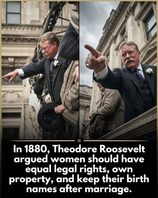
Teddy
In 1880, Theodore Roosevelt was only 21 years old and still a student at Harvard University when he wrote something that challenged one of America’s most deeply rooted traditions.
At a time when many married women had limited legal control over their own property and finances, Roosevelt argued that the law should treat women and men equally.
His thesis, The Practicability of Equalizing Men and Women Before the Law, rejected the idea that marriage should automatically place a woman’s property under her husband’s control. He also argued that women should be able to keep their birth names after marriage, a position that challenged social expectations in the late nineteenth century.
These weren’t popular opinions.
Many Americans believed a wife’s legal identity should be tied to her husband’s, and calls for equal rights were often dismissed or resisted. Roosevelt saw it differently. Having grown up around capable women who managed family responsibilities and finances, he believed inequality was created by society rather than nature.
As his political career grew, his public positions became more cautious. Political realities often limited how strongly he pushed for women’s rights while serving in office. Years later, during his 1912 Progressive Party campaign, he openly supported women’s suffrage on a national stage.
His youthful Harvard thesis remains one of the clearest windows into what he believed before politics demanded compromise.
Long before Theodore Roosevelt became president, he was already questioning traditions that many people accepted without challenge.
Story based on historical records. This post is for educational purposes.