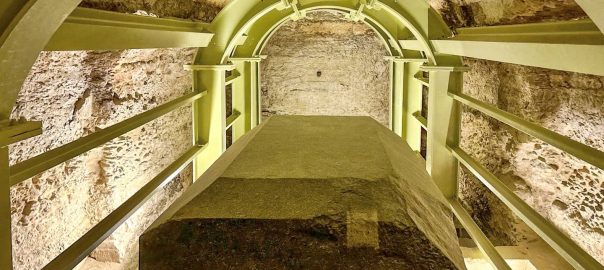
Amazing & Unexplained
The main regret about our trip to Egypt was that we were not able to visit the Serapeum of Saqqara. While the sarcophagi have been referred to as bull coffins, there is no substantial evidence that this is true. The true purpose is unexplained, as is the method of construction and placement.
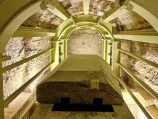
The burial site is the Serapeum of Saqqara, located northwest of the Step Pyramid of Djoser, near Memphis. It was used from the New Kingdom (starting under Amenhotep III) through the Ptolemaic Period, and was closed around 30 BC Wikipedia+1. The complex evolved from isolated tombs into vast underground galleries lined with 24–25 sarcophagi Egypt Tours Portal.
The sarcophagi are made from extremely hard stones like granite and diorite, quarried from distant sites (up to 800 km away) The Ancient Code. Weights range from about 40 to 100 tons, with lids of around 25–30 tons. The Serapeum was rediscovered in 1850 by French Egyptologist Auguste Mariette.
The main corridor measures roughly 300 meters in length, and there are 24 granite sarcophagi in total, each placed inside its own side chamber.